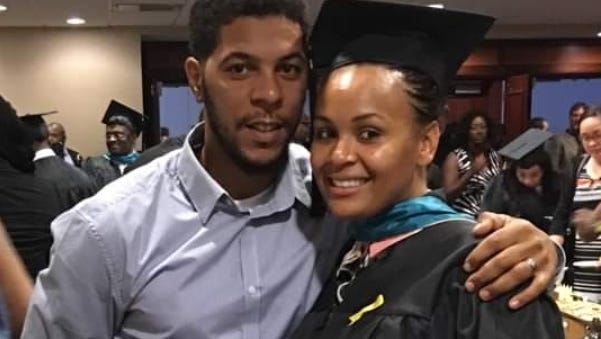
Kathleen Edwards left home on the morning of Dec. 9, 2018, with the thought that she was protecting her husband. It was an overcast, drizzly Sunday morning and her husband, Gregory Lloyd Edwards, a 38-year-old disabled combat veteran, who like her, struggled with post-traumatic stress disorder, had been acting erratically at home. For four sleepless days, Gregory Edwards paced the floor of their Grant-Valkaria house, hearing noises, opening and closing doors, and constantly checking on their sleeping toddler. Kathleen Edwards, nine months pregnant with the couple’s second child, had seen these signs before, especially around the Christmas holidays. She feared that if she left her husband alone he would hurt himself or worse, become suicidal. “He wasn’t sleeping and he was not thinking right. He was excited because we were about to have a new baby,” Kathleen Edwards recalled.
So on that overcast morning at around 11 a.m., Kathleen Edwards took her daughter, then barely 18 months old, and Gregory on what she expected to be an uneventful outing to the Walmart in West Melbourne to pick up some diapers for the baby and sleeping pills for her husband. Within the hour, Gregory Edwards would have what his wife told police was a PTSD episode in front of the store. He climbed into the back of a box truck where Christmas donations were being collected and, according to police, assaulted one of the volunteers. Kathleen then watched as the man she loved was wrestled to the ground and held there until police arrived. When it was all over she watched as her husband was driven away in a police cruiser, feeling hopeful that he would get the mental health help he needed. Instead, Gregory Edwards, a former army medic who served in Kosovo and Iraq, ended up on life support following an altercation with seven corrections deputies at the Brevard County Jail. He died the next day. And the system Kathleen Edwards hoped would help instead cleared the corrections officers involved of any criminal wrongdoing.
Source: Florida Today
 Funeral for Justice